
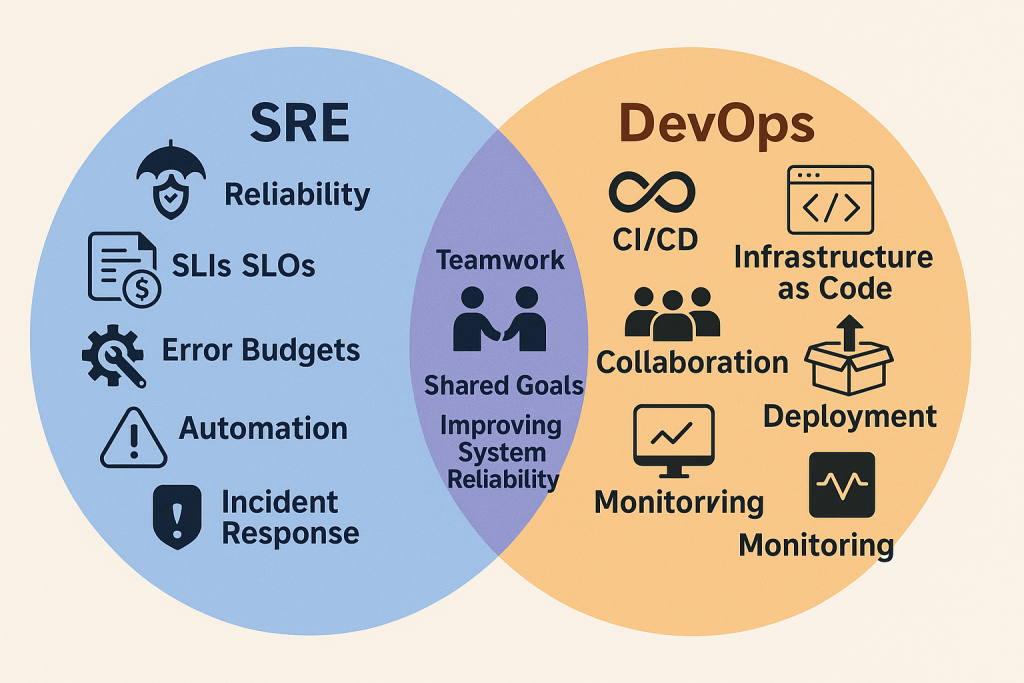
SRE vs DevOps: Understanding the Key Variations and Methods to Select
In your profession in know-how, you could encounter phrases like SRE and DevOps. Each outline approaches to software program improvement and operations. They share targets, however in addition they have distinct traits. Understanding these variations may help you determine which framework fits your group or venture.
Key Ideas of SRE and DevOps
Website Reliability Engineering (SRE) and DevOps purpose to enhance collaboration between improvement and operations groups. They deal with automation, monitoring, and quicker deployment cycles. In response to a report by DORA, organizations with efficient DevOps practices can obtain 46 occasions extra frequent code deployments. These frameworks will let you reply rapidly to market modifications and buyer wants.
What’s SRE?
SRE originated at Google. It focuses on sustaining dependable companies and features a clear set of metrics to gauge efficiency. Key rules of SRE embody:
- Service Degree Targets (SLOs): These are particular targets for availability, latency, and efficiency.
- Error Budgets: These enable groups to just accept a sure proportion of errors. This steadiness helps prioritize options versus reliability.
- Automation: SRE emphasizes automating handbook processes to scale back human error.
What’s DevOps?
DevOps seeks to interrupt down silos between improvement and operations. It emphasizes communication, collaboration, and shared obligations. Key rules of DevOps embody:
- Steady Integration and Steady Deployment (CI/CD): These practices automate testing and deployment, making it simpler to launch new options.
- Cultural Shift: DevOps encourages a shift in pondering. Each improvement and operations share widespread targets and obligations.
- Suggestions Loops: Steady suggestions helps groups enhance their merchandise and processes.
Step-by-Step Steering to Implementing SRE or DevOps
For those who determine to undertake SRE or DevOps, comply with these steps to make sure a easy transition.
Step 1: Assess Your Present Atmosphere
Start by evaluating your present processes. Search for areas that want enchancment, comparable to:
- Time to deploy
- Frequency of outages
- Developer satisfaction
Step 2: Set Clear Targets
Outline what you wish to obtain by adopting SRE or DevOps. Take into account the next targets:
- Quicker software program supply
- Improved system reliability
- Enhanced group collaboration
Step 3: Select Metrics
Decide which metrics will finest measure your success. For SRE, deal with metrics like:
- Availability proportion
- Latency averages
- Error charges
For DevOps, take into account monitoring:
- Deployment frequency
- Lead time for modifications
- Imply time to restoration
Step 4: Put money into Instruments
Choose the suitable instruments to help your chosen framework. Frequent instruments embody:
- CI/CD instruments like Jenkins or GitLab
- Monitoring instruments like Prometheus or Datadog
- Incident administration instruments like PagerDuty or Opsgenie
Step 5: Practice Your Group
Present coaching to your group. Guarantee everybody understands the targets, instruments, and practices of SRE or DevOps. This funding will result in higher collaboration and improved outcomes.
Step 6: Implement Progressively
Begin small. Implement modifications in a single venture or group earlier than rolling them out organization-wide. Collect suggestions and make changes as wanted.
Frequent Errors and Methods to Keep away from Them
Transitioning to SRE or DevOps entails dangers. Many groups face challenges throughout this course of. Listed below are widespread errors and tricks to sidestep them.
Mistake 1: Underestimating Cultural Change
Each SRE and DevOps require a change in mindset. Many groups overlook the cultural elements.
Answer: Foster open communication and teamwork. Encourage all members to share concepts and issues. This follow builds belief and helps create a collaborative atmosphere.
Mistake 2: Ignoring Documentation
With out correct documentation, confusion can come up. Groups usually fail to doc procedures and practices.
Answer: Hold documentation up to date and accessible. This strategy ensures everybody understands processes and requirements.
Mistake 3: Focusing Solely on Instruments
Some groups assume adopting instruments will remedy all points. Merely utilizing the newest know-how doesn’t assure success.
Answer: Keep in mind that instruments help practices. Make investments time in constructing efficient processes earlier than integrating new instruments.
Mistake 4: Skipping Automation
Handbook processes decelerate deployments and enhance errors. Many groups resist automating duties.
Answer: Determine repetitive duties and automate them. Automation improves effectivity and reduces the danger of human errors.
Abstract of Actions You Ought to Take
To include SRE or DevOps in your group, comply with these steps:
- Assess your present atmosphere to establish weaknesses.
- Set clear, measurable targets tailor-made to your group’s wants.
- Select the suitable metrics to gauge your progress.
- Put money into instruments that help your chosen framework.
- Practice your group on new processes and instruments.
- Implement modifications regularly and search suggestions.
By understanding the variations between SRE and DevOps, you may make knowledgeable selections that profit your group. Concentrate on constructing a tradition that helps collaboration and automation. This strategy will enhance your group’s efficiency and improve product reliability.
